Scotus Upholds Birthright Citizenship and Strikes Down Trump’s Executive Order
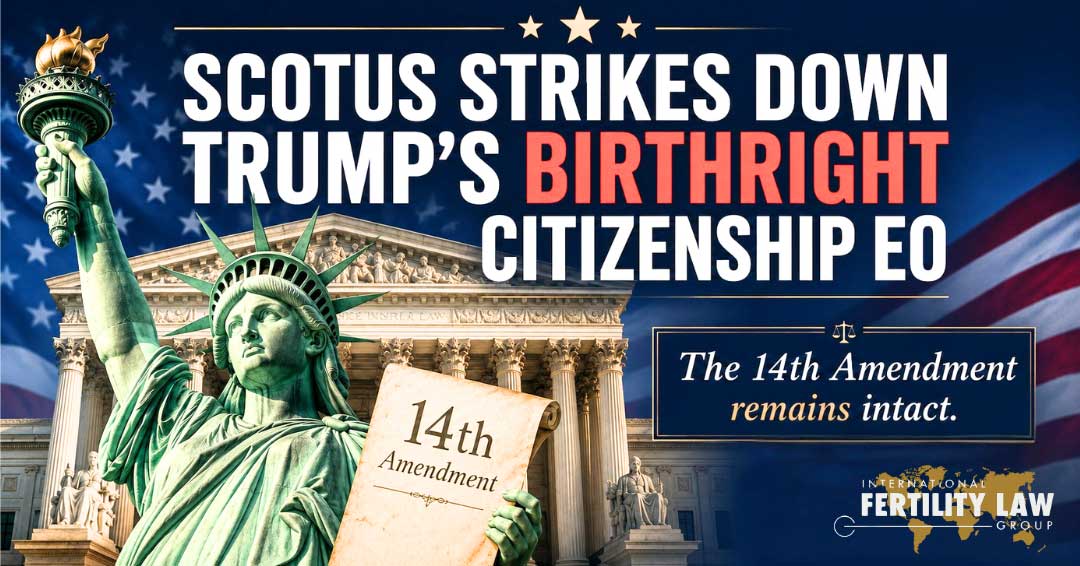
The Supreme Court upheld birthright citizenship and ruled against Trump's Executive Order 14160, reaffirming Fourteenth Amendment protections.
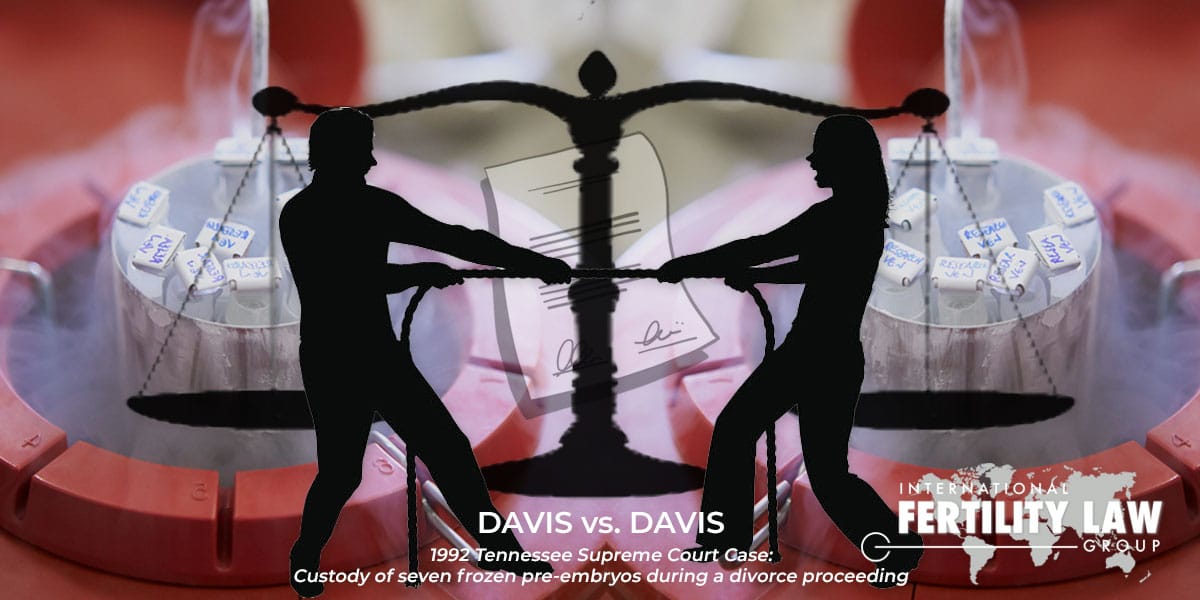
The law of assisted reproduction must evolve alongside the families it serves and the science enabling them. At IFLG, we see daily how inconsistent legal approaches affect intended parents worldwide. Since the 1992 Davis v. Davis decision—which set early guidance for frozen-embryo disputes by emphasizing prior agreements and the right to avoid procreation—states have adopted conflicting frameworks, creating uncertainty. Uniform statutes are now essential to replace outdated, inconsistent case law and ensure fairness and protection for everyone involved in assisted reproduction.
Artificial intelligence is no longer on the sidelines of reproductive medicine. It’s in the room analyzing sperm, ranking embryos, and influencing decisions that once rested solely with doctors, patients, and their hopes for the future.
Judge Joseph LaPlante of the U.S. District Court in New Hampshire certified a class action lawsuit covering all children born in the United States on or after February 20 who would be affected by the executive order and issued a preliminary injunction blocking its enforcement. This includes children born to undocumented parents, asylum seekers, and families present on student or work visas.
On June 27, 2025, the U.S. Supreme Court issued a decision that, while procedural in nature, has sparked understandable questions from international intended parents pursuing surrogacy in the United States. Chief among them: Will my child still be recognized as a U.S. citizen? This post is intended to offer clarity.
Trump v. CASA, Inc., et al. What does the Supreme Court's June 27, 2025 ruling mean for birthright citizenship? The short answer: It's still unfolding.The Court's decision on June 27, 2025, did not address the guarantee of citizenship for those born on U.S. soil enshrined in the 14th Amendment to the US Constitution since the 1800s. However, it did narrow the power of federal courts to issue nationwide (i.e., universal) injunctions.
California State Senate passed SB 257—the PARENT Act—with a unanimous vote. The bill aims to make pregnancy a qualifying event for special enrollment in health insurance plans, regardless of how the pregnancy was conceived. This includes situations like surrogacy or gestational carrying. The bill is intended to ensure that families formed through surrogacy are treated equally under California's health insurance laws.
Pride is a celebration of love’s quiet defiance—and its enduring triumph. It’s a tribute to those who’ve made space for joy in a world that hasn’t always made space for them. At IFLG, we have the privilege of walking alongside LGBTQ+ individuals and couples who are building families not just with hope, but with intention, resilience, and grace.
U.S. District Court Judge John Coughenour blocked the implementation of the Executive Order, calling it “blatantly unconstitutional.”
Many IFLG clients and professional colleagues are confused and concerned about whether Mr. Trump, who’s second term started today, can eliminate or impact birthright citizenship in the U.S. and whether this will have any impact on the children born to intended parents coming to the U.S. for surrogacy.
Frozen embryos are filling storage banks around the world. It's a struggle to know what to do with them. Learn more as IFLG's Founding Partner, Rich Vaughn, is featured in an MIT Technology Review article by Jessica Hamzelou.
There are consequences of the election results that are tangential and indirectly related to surrogacy and assisted reproduction. Notably for now, seven of the 10 state ballot measures enhancing or clarifying protections of abortion rights were successful.
With the US Presidential Election only a couple of weeks away, those of us who work in the field of Assisted Reproductive Technology (ART) are paying very close attention to the polls. Among other extremely significant issues, abortion, ART, contraception, and what constitutes a family are all on the table.
Italy has made it illegal for couples to go abroad to have a baby through surrogacy. It’s a move critics say would criminalize parenthood for some couples — in particular gay men.
California Governor Gavin Newsom signed SB 729 into law requiring large group health care service plan contracts and disability insurance policies to provide coverage for the diagnosis and treatment of infertility and fertility service, including in vitro fertilization (IVF).
Earlier this year, the Alabama Supreme Court ruled that all embryos are legally regarded as children, stating that Alabama’s Wrongful Death of a Minor Act applies to all unborn children, regardless of their location. By granting frozen embryos the same legal status as living children, the court's decision could dramatically alter how embryos created during assisted reproduction are managed, stored, and disposed of.
State insurance laws and health plan policies on fertility coverage are under the microscope of lawmakers and fertility organizations seeking to eliminate what they see as discriminatory obstacles to health care for LGBTQ+ individuals.
With the ever-changing landscape of modern American family life and the growing number of children being born via sperm or egg donors, the pendulum of public opinion toward this topic, once shrouded in secrecy, has swung toward acceptance and honesty. In the more than 50 years since the inception of assisted reproductive technology (ART), society has slowly adopted a more open and honest approach to telling donor-conceived children about their origin story, as research now shows that they do better in society knowing their biological roots.
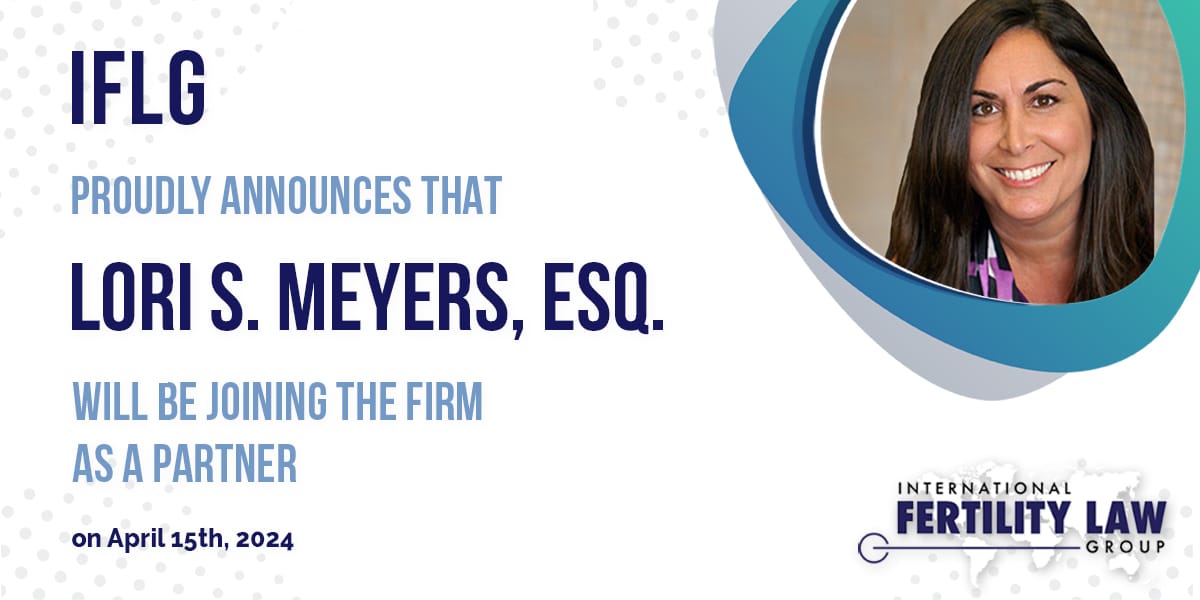
International Fertility Law Group (IFLG) is proud to announce that Lori S. Meyers, Esq., will be joining the firm as a partner on April 15th, 2024.
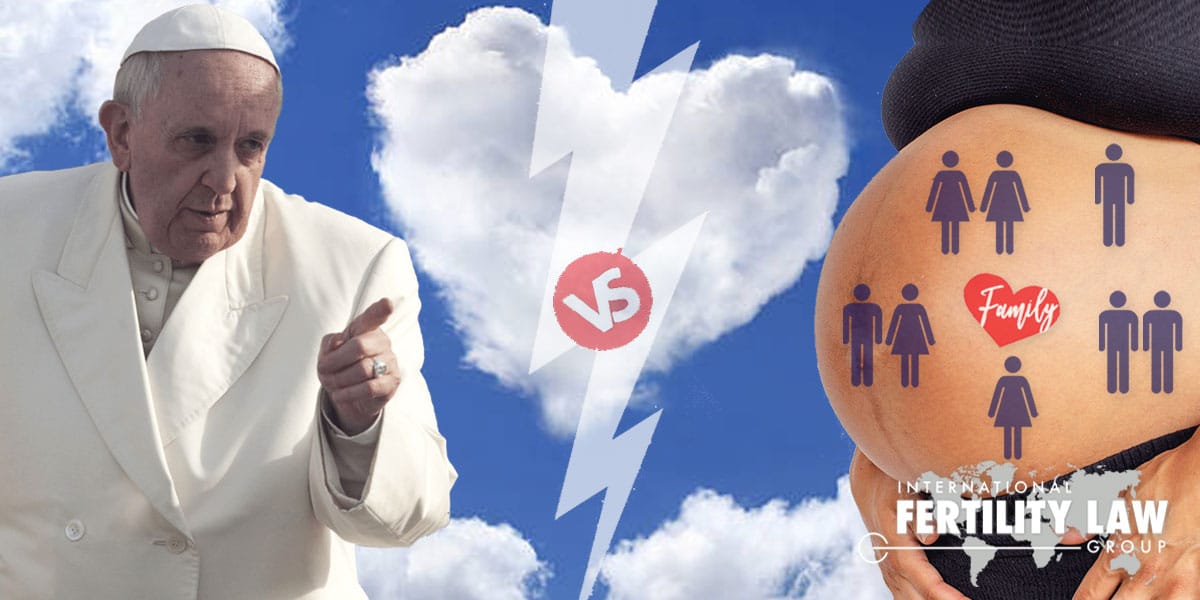
Pope Francis recently made an absolute statement advocating for the complete prohibition of surrogacy, a position that reflects the traditional stance of the Roman Catholic Church on assisted reproductive technologies. While we respect everyone’s right to their own religious beliefs, it is equally important to consider that individuals who do not subscribe to those particular teachings should not be compelled to follow them.
According to the Centers for Disease Control and Prevention (CDC), approximately 2.3% of babies born yearly in the United States are the result of assisted reproductive technologies (ART) thanks to the work of thousands of ART professionals coupled with the determination, sacrifice, and love of thousands of so many intended parents, egg and sperm donors, and surrogates.
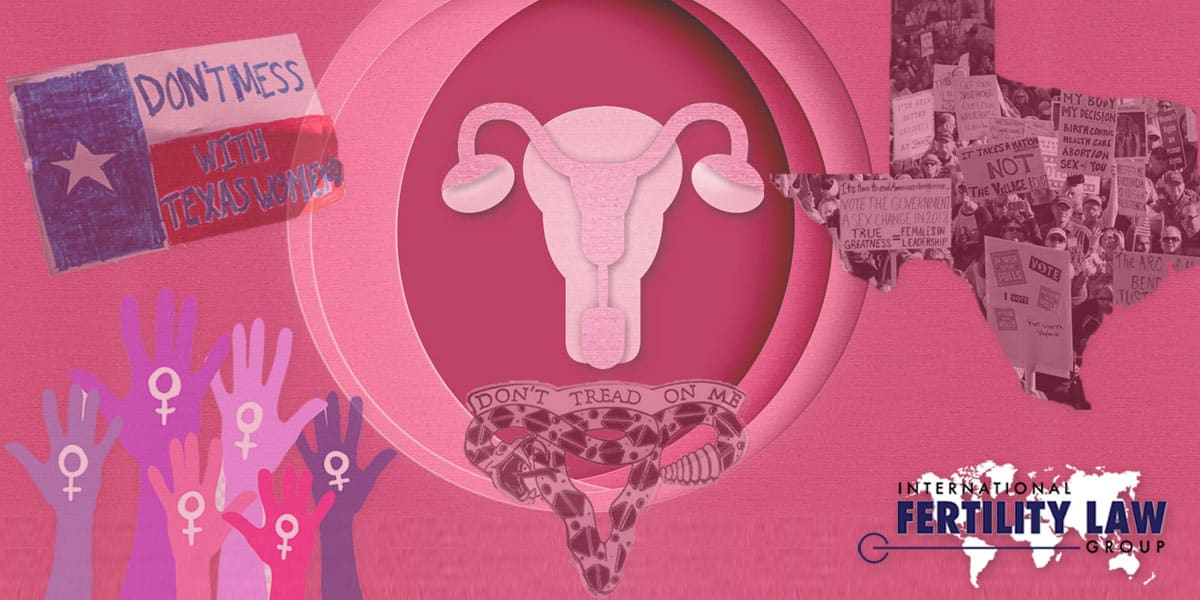
With its restrictive abortion law, the state of Texas has become an example of why bans on abortion are not only a detriment to women’s rights and health, but, as time passes and lawsuits are filed, it is also giving us insight into possible far-reaching consequences in the world of assisted reproduction.
Egg donors have helped thousands of intended parents fulfill their dreams of parenthood. According to a study of prospective egg donors published in the Oxford Academic Journals, 98 percent of participants expressed that altruism played a significant role in their decision to donate eggs.
A 20-year study finds that children born via egg donation, sperm donation, and/or surrogacy grow up just fine, overturning long-held assumptions that children born via assisted reproductive technology (ART) are…
Long-term effects of anonymous sperm donation have emerged as technology evolves, and donor-conceived people discover their past.
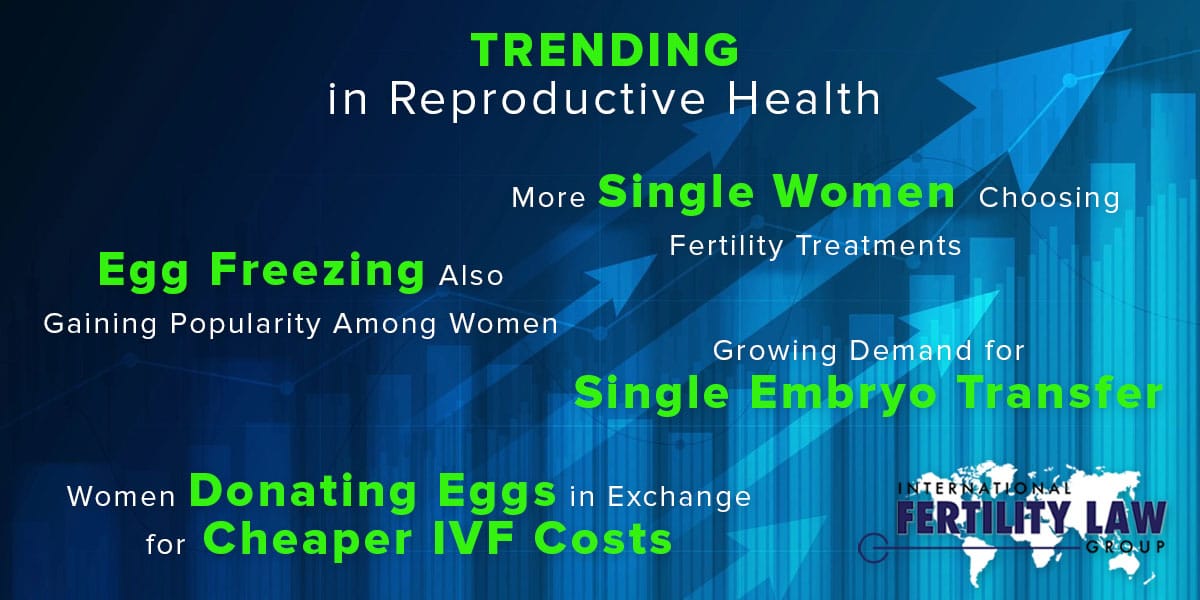
Four new trends in reproductive health have intended parents proactively seeking their own unique path to parenthood.
Infertility is described as a disease according to the World Health Organization (WHO), and while other diseases such as cancer and diabetes are covered by most employers under their health benefits packages, infertility treatment has taken a back seat. While it is no secret that an unsupported workforce lacks in performance, the added stress and anxiety of struggling with infertility have been shown to lead to employees’ loss of confidence, withdrawal, and even feeling the need to resign.
Although Black History Month is a time to highlight and celebrate achievements in the Black community, it is also a time to acknowledge where we have come from, as Americans…
Cryopreservation continues to help with new innovations giving cancer patients, embryo donation recipients, and war veterans fertility hope.
With over ten percent of men and women of reproductive age struggling with infertility, the reality of having a friend at some point in your life who is fighting their…
The overturning of Roe v. Wade by the U.S. Supreme Court this summer had elected officials in many states vowing to protect women’s rights, while other states’ leaders already had…
The recent pandemic-related surge in in vitro fertilization will inevitably contribute to a growing number of legal disputes over the disposition of unused embryos. The best way to avoid what…
On February 2, 2021, just a little over a year after it initially approved a law to legalize in vitro fertilization for lesbians and single women, the French Senate voted…
The new Child Parent Security Act (CPSA) took effect on Monday, February 15, 2021, legalizing compensated surrogacy in the state of New York, with robust protections for surrogates and intended…
Congratulations, New York! Today, February 15, 2021, the Child Parent Security Act (CPSA) takes effect, ending the three-decade-long ban on surrogacy in the state of New York. In this informative…
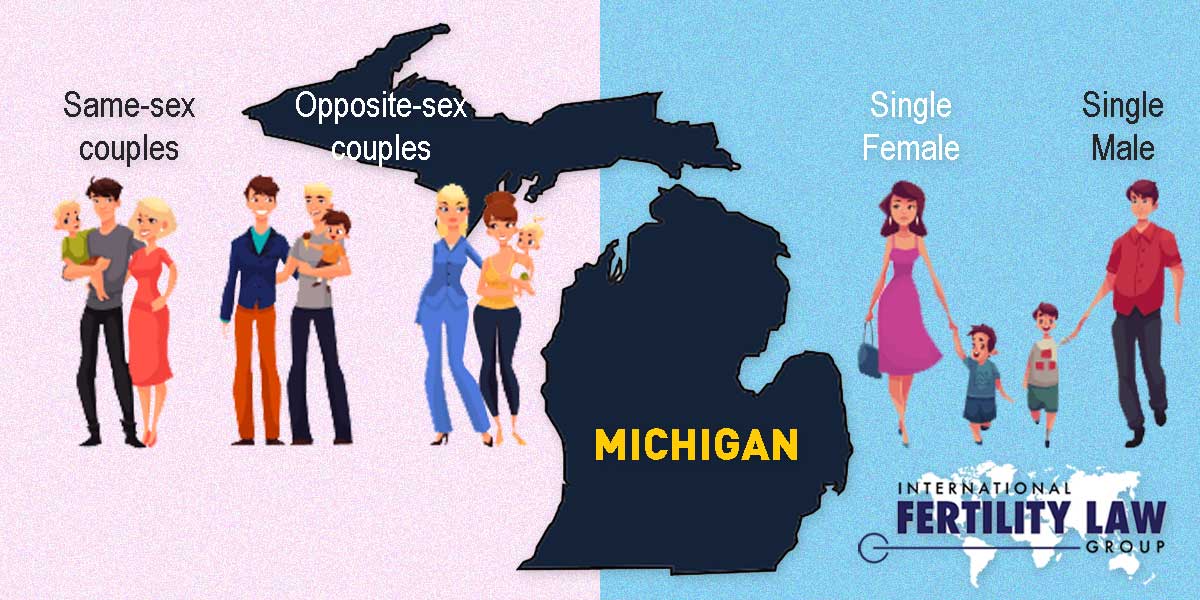
Michigan couple Tammy and Jordan Myers, biological parents of twins born via surrogacy January 11, must adopt their own babies in order to become their legal parents. That’s because little…
Exciting new tools are using artificial intelligence (AI) to improve success rates for assisted reproduction technologies (ART) such as in vitro fertilization (IVF) and surrogacy, resulting in fewer procedures, lower…
COVID-19 lockdowns and infection fears have led to drastic shortages at many U.S. sperm banks, sending many lesbians and single women to online forums in a search for sperm donors.…
Eggs, or oocytes, from women who contract COVID-19 are unlikely to become infected with the virus or to infect resulting embryos, according to a recent scientific study. Published in Human…
Join Rich Vaughn of International Fertility Law Group, Dr. Said Daneshmand of the San Diego Fertility Center and Darlene Pinkerton of A Perfect Match surrogacy agency for a discussion on…
DNA testing, ancestry websites and new laws mean sperm donor anonymity is no longer guaranteed. IFLG explains changes in sperm donation law.
Fertility lawyer Rich Vaughn of International Fertility Law Group discusses the legal objectives and arrangements involved with establishing Parental Rights when utilizing assisted reproductive technology as an option towards the dream of becoming parents. Contact IFLG to learn about how we help parents via IVF establish Parental Rights.
Barrett confirmation to Supreme Court poses a threat to in vitro fertilization (IVF). IFLG calls on Senators to protect reproductive rights. While advocates for reproductive freedom brace for an assault on abortion rights with the potential confirmation of Amy Coney Barrett to the U.S. Supreme Court, fertility professionals fear that access to common infertility treatment such as in vitro fertilization, or IVF, might also be in jeopardy.
Watch Rich Vaughn of International Fertility Law Group as he discusses the legal musts and must-nots during his participation in this informative webinar led by leading fertility specialist and advocate for LGBTQ families, Dr. John Norian, in which he discusses 'fatherhood for gay men through surrogacy'.
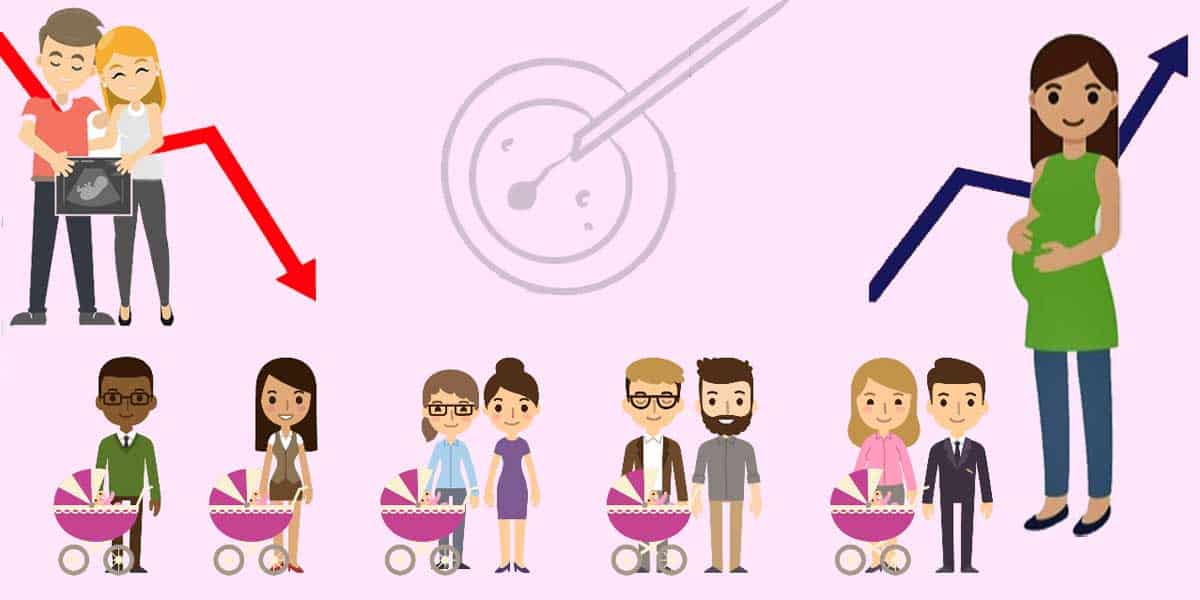
Human birth rates have been dropping for decades, over approximately the same period that assisted reproductive technology (ART) has become increasingly efficient, reliable and accessible as a family-building solution. According…
For many individuals who consider parenthood via in-vitro fertilization and surrogacy, the most gut-wrenching questions about the process are these: What if the surrogate changes her mind? Can a surrogate choose to…
Join Rich Vaughn of International Fertility Law Group and surrogacy professionals from all over the U.S. for the latest in a series of webinar discussions about the impacts and challenges…
Yesterday I participated in the second weekly national webinar for surrogacy professionals, convened by the American Bar Association and SEEDS (Society for Ethics in Egg Donation and Surrogacy). The webinars have been a great forum for fertility lawyers, reproductive healthcare providers, surrogacy and donor agencies and non-profit advocacy organizations from all over the U.S. to share information about current conditions and issues of concern to our clients and stakeholders.
As the coronavirus covid-19 crisis wears on, the dilemma of intended parents from other countries planning to have babies through surrogacy in the United States has made for compelling headlines:…
Yesterday I participated in the second weekly national webinar for surrogacy professionals, convened by the American Bar Association and SEEDS (Society for Ethics in Egg Donation and Surrogacy). The webinars have been a great forum for fertility lawyers, reproductive healthcare providers, surrogacy and donor agencies and non-profit advocacy organizations from all over the U.S. to share information about current conditions and issues of concern to our clients and stakeholders.
If you have not requested an expedited birth certificate, it may take several weeks before your child’s birth certificate is available. Generally a written or online request is required for you to receive your child’s birth certificate, along with confirmation that you are an “authorized” person. You can order the certificate via an online service such as vitalchek.com or directly from the County Clerk or Recorder in the county where your baby was born. We strongly suggest you purchase multiple copies of your child’s birth certificate—particularly if you do not reside in the US or will need to request an amended birth certificate in future. The office will charge a per-copy fee.
Once the birth certificate worksheet is completed, the hospital birth clerk will send it to the vital records office in the county in which your child was born.
In the case of an expedited birth certificate request, ask the hospital birth clerk for the address of the local vital records office, where you will pick up the birth certificate in person. Call before you go to confirm the birth certificate is ready and available for you to pick up.
If you need an expedited birth certificate, as you might if you plan to take your baby home to another country, ask the hospital birth clerk to expedite the birth certificate request at this time. In most cases, you will receive the expedited birth certificate within a few days.
Following your baby’s birth, the hospital birth clerk will complete a birth certificate and birth registration worksheet.
Some states require that the birth registration documents include some information about the surrogate for public health and statistical purposes only, but such information will appear only on the confidential portion of the birth registration; however, the official birth certificate will not contain this information.
If your baby is born in a “pre-birth state,” where pre-birth orders of parentage are permitted for babies born via surrogacy, the birth clerk will use information from the pre-birth parentage judgment we obtain on your behalf. The parentage judgment will direct the registrar to allow you to name the child, as well as list you as the parent(s).
In states where pre-birth parentage orders are not allowed, the process is essentially the same except the birth clerk will eventually use information from the post-birth order we obtain on your behalf. In some instances, the birth clerk will need to send the birth registration to vital records before the post-birth order is obtained; and in these situations, the state’s Vital Records will enter the correct birth registration to show you as the legal parent(s).