
Surrogacy Cases Gone Wrong in International Media
A number of high-profile cases of malfeasance or unethical activity related to international surrogacy have recently made headlines worldwide, fueling negative misconceptions.
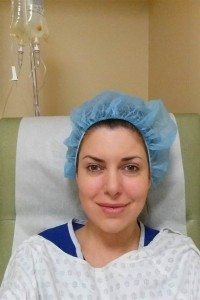
Thomas made the decision to use her highly visible Today Show podium as a way to get the topic out in the open and potentially make others undergoing fertility treatment feel more comfortable and less alone in the process.
New Hampshire Governor Maggie Hassan earlier this month signed SB 353, effective immediately, to bring New Hampshire’s existing surrogacy law up to speed with technological advances in ART and with nationwide best practices.
ABC report calls out Planet Hospital, a U.S.-based surrogacy brokerage offering surrogacy services in Cancun, Mexico, for allegedly shady practices.
In the wake of the June 26 ruling by the European Court of Human Rights on two French cases, the Spanish ministries of Justice and Foreign Affairs are ordering their consulates to reinstate registrations of children born via surrogacy to Spanish intended parents in countries where surrogacy is legal.
The Japanese legislature currently is considering its first law governing third party sperm and egg donation and surrogacy—and the process so far has been fraught with contention and delays.
National Coalition provides a forum for the leaders in the field of ART to report on their current and planned activities, efforts and issues of greatest interest and concern in the United States.
Continuing Legal Education Conference of the American Bar Association, Family Law Section, held in Southampton, Bermuda was an important opportunity for my colleagues in the fields of family law and fertility law.
In June 2013 an Ohio jury found the Roman Catholic Archdiocese of Cincinnati guilty of discrimination against an unmarried computer technology teacher, Christa Dias, who became pregnant and had a child via in vitro fertilization.
Earlier this year, popular MSNBC host Melissa Harris-Perry put a very public face on assisted reproductive technology with the announcement that she and husband James Perry were new parents of a baby girl.
A recent ruling by the European Court of Justice denied the claims of two mothers via surrogacy who had petitioned their employers for maternity leave.
An exciting new technology offers the promise of diagnosing mysterious and rare causes of infertility by using nanoparticles to penetrate sperm.
Although the number of babies per IVF birth has dropped, today most of those multiples are twins. The next goal of professionals in the field is to reduce the number of twins.
Some 65 babies born or about to be born and their gay intended parents are trapped in a kind of legal limbo in Thailand, where the surrogate mothers reside.
The Today Show, as part of a series on ART, recently highlighted technological improvements that have resulted in fewer births of triplets and higher multiples and, increasingly, fewer births of twins.
Growing Generations, surrogacy and egg donation agency, was featured recently in an article in DuJour Magazine about the growing numbers of single men choosing to become parents via surrogacy.
In the movie “Delivery Man,” Vince Vaughn stars as a Joe Sixpack sort of guy who delivers meat for his father’s company and whose pregnant girlfriend doesn’t want him around.…
“Who’s Your Daddy?” the first in the six-episode MTV docu-series, “Generation Cryo,” premiered Nov. 25 at 10 p.m. Pacific Time. The second episode, “Come To Grips,” will air next Monday,…
Earlier this month I attended the American Academy of Assisted Reproductive Technology Attorneys (AAARTA) and American Academy of Adoption Attorneys Mid-Year Conference in Charleston, South Carolina. The conference, entitled “A…
With the relaxing of China's one-child policy, the number of Chinese intended parents coming to the U.S. to create families via assisted reproductive technology is likely to increase.
AFA’s recent initiative to help members of the U.S. armed forces and their families by providing information and resources and providing discounted infertility treatment and preservation services to service members.
Honorees at the upcoming American Fertility Association New York Illuminations November 4 are Nia Vardalos, recipient of the 2013 Carol Berger Adoption Advocacy Award, and Dr. Alan S. Penzias, M.D. recipient of the Joyce M. Vargyas MD Visionary Award.

This amazing story about fertility professionals who went above and beyond to salvage the hopes and dreams of intended parents really hits home.
One of ABA Family Law Section Committee on Assisted Reproductive Technology projects concerns updating the Model Act Governing Assisted Reproductive Technology in keeping with rapidly evolving customs and practices.
The ABA Family Law Section ART Committee is always actively engaged in developing and producing high-quality continuing legal education and mentoring on ART law topic
Despite the fact that more women are putting off marriage and childbirth until later in life, U.S. fertility rates haven’t changed significantly over the past 20 years
Delaware law now authorizes such agreements and establishes clear standards and procedures for defining the relationship of parent and child resulting from gestational surrogacy
I was honored recently to be named chair of the American Bar Association’s Family Law Section Committee on Assisted Reproduction.
Restrictions on surrogate compensation make family formation via assisted reproductive technology (“ART”) a challenge for many single men. In India and Ukraine, two of the few countries where commercial surrogacy is allowed, single men are excluded.
In-Vitro Maturation, or IVM, is one of the newest technologies being utilized in the fertility field as a cost-efficient, safe alternative to In-Vitro Fertilization (IVF)
In the US approximately 2,000,000 men are diagnosed with infertility problems. The good news is that almost 99% of male infertility cases can be resolved.
Patric has become the poster child for a proposed new law that would expand the rights of California sperm donors to have a parental relationship with their offspring under certain conditions.
The Wisconsin Supreme Court ruled yesterday, July 11, that surrogacy agreements, under which a woman agrees to carry and give birth to a child for the child’s intended parent or parents, are legal and enforceable.
A new California law will allow women who donate eggs for medical research to be compensated.
Restricting the program to those with biological infertility conditions would have obvious negative ramifications for same-sex couples, for whom IVF is often a means of becoming parents.
Using time-lapse photography to create mini-movies of embryos may hold the secret to increasing the success rate of in vitro fertilization
Boston IVF, a medical practice specializing in assisted reproductive technology (ART), has received a two-year, $1 million grant from the U.S. Department of Health and Human Services to promote donation of frozen embryos.
The Gartner family of Iowa received wonderful news on May 3rd when they were notified that the Iowa Supreme Court agreed with them that the Department of Health must include the nonbiological mother of the couple’s daughter on the birth certificate.
In a landmark case, the genetic mother of twins born to a surrogate triumphed over the Irish government, winning the right to be listed as the mother on the birth certificates of her children.
As a member of the American Fertility Association’s board of directors, I’m very proud to have been part of Illuminations LA 2013 on April 13.
It is essential that intended parents understand what steps they need to take in order to ensure their babies are legal citizens of the country in which they will reside and that the parents are legally recognized as such.
Another development in France was the issuance of an order from the French Justice Minister Christiane Taubira that could have enormous impact on French families created via assisted reproductive technology.
There is a very interesting and potentially ground-breaking case being heard in the U.K. courts right now about the role of sperm donors in the lives of the children they help to create.
A paternity case involving a sperm donor and a Miami lesbian couple who became parents via artificial insemination has created a media stir recently.
Recent news out of Australia is evidence of two important trends: first, that the number of children born through surrogacy is increasing significantly, and second, that Australia, like many other countries, is struggling to find ways for its legal system to keep up with fertility technology.
Our family is featured in a recent issue of Pink Parenting as part of a series on the families that are part of a print campaign by our partner agency, Growing Generations.
Tommy Woelfel and Rich Vaughn along with their twin boys are featured currently in a London Times Magazine article, Inside gay Hollywood’s baby boom, by Rhys Blakeley.
The prospect of parenting a child alone, physically, mentally and financially, for 18 years or more is a daunting one. But for an adult who has considered the pros and cons and is genuinely committed to becoming a single parent, ART can be an option.
Apparently during the taping of a segment for the new season, Glanville revealed that Maloof had used a surrogate to have her twin boys, Christian and Colin, now 6 years old. The publicity surrounding what is and should be a completely personal decision has raised awareness of a question that every parent of a child born through surrogacy faces: When, how and what do I tell my child about his or her birth story?
A survey of 61 women who conceived and gave birth after 40 via IVF found that half had been shocked to learn they needed fertility treatment in order to conceive.
If you have not requested an expedited birth certificate, it may take several weeks before your child’s birth certificate is available. Generally a written or online request is required for you to receive your child’s birth certificate, along with confirmation that you are an “authorized” person. You can order the certificate via an online service such as vitalchek.com or directly from the County Clerk or Recorder in the county where your baby was born. We strongly suggest you purchase multiple copies of your child’s birth certificate—particularly if you do not reside in the US or will need to request an amended birth certificate in future. The office will charge a per-copy fee.
Once the birth certificate worksheet is completed, the hospital birth clerk will send it to the vital records office in the county in which your child was born.
In the case of an expedited birth certificate request, ask the hospital birth clerk for the address of the local vital records office, where you will pick up the birth certificate in person. Call before you go to confirm the birth certificate is ready and available for you to pick up.
If you need an expedited birth certificate, as you might if you plan to take your baby home to another country, ask the hospital birth clerk to expedite the birth certificate request at this time. In most cases, you will receive the expedited birth certificate within a few days.
Following your baby’s birth, the hospital birth clerk will complete a birth certificate and birth registration worksheet.
Some states require that the birth registration documents include some information about the surrogate for public health and statistical purposes only, but such information will appear only on the confidential portion of the birth registration; however, the official birth certificate will not contain this information.
If your baby is born in a “pre-birth state,” where pre-birth orders of parentage are permitted for babies born via surrogacy, the birth clerk will use information from the pre-birth parentage judgment we obtain on your behalf. The parentage judgment will direct the registrar to allow you to name the child, as well as list you as the parent(s).
In states where pre-birth parentage orders are not allowed, the process is essentially the same except the birth clerk will eventually use information from the post-birth order we obtain on your behalf. In some instances, the birth clerk will need to send the birth registration to vital records before the post-birth order is obtained; and in these situations, the state’s Vital Records will enter the correct birth registration to show you as the legal parent(s).